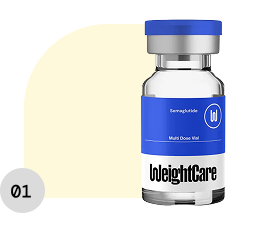
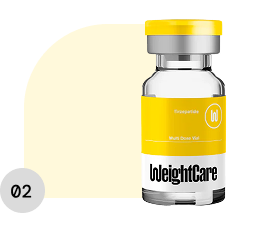


More women who have reached their goal weight are asking their providers about lower maintenance doses, and the conversation around semaglutide microdosing is picking up for good reason. Here is what you need to know before your next appointment.
First, what does "microdosing" actually mean here?
In the context of GLP-1 weight loss medication, microdosing refers to using semaglutide or tirzepatide at doses lower than the standard clinical titration schedule. The standard protocol for semaglutide typically begins at 0.25 mg weekly and increases gradually over months toward a therapeutic maintenance dose. In a microdosing context, particularly for patients in the weight maintenance phase, doses may be reduced to as little as 0.05 mg to 0.1 mg per week and adjusted based on how the body responds over time.
This is not something you should self-prescribe or adjust without guidance. You can absolutely ask your WeightCare provider about this appro ach during a consultation, as there is growing clinical interest in how lower doses support long-term weight maintenance after the active weight loss phase has concluded.
A note on compounded medication: Flexible dosing like this option is one reason why compounded semaglutide can be a real advantage. Unlike commercially manufactured pens that come in fixed doses, compounded preparations can be customized to the exact dosage your provider prescribes for your individual plan, including doses that fall well below the standard starting point.
What the research tells us
While the term "microdosing" is more common in patient communities than in formal clinical literature right now, the underlying principle has solid grounding. Several studies on semaglutide have confirmed that lower dose maintenance protocols can preserve weight loss outcomes without requiring patients to remain on full therapeutic doses indefinitely. Slower or reduced dosing approaches are associated with strong gastrointestinal tolerability and are increasingly relevant for patients who have already achieved their goal weight and are focused on sustaining it.
The takeaway is that the benefits of GLP-1 therapy do not have to require the highest possible dose to be meaningful. The question for maintenance is finding the lowest effective dose that keeps your results stable, and that threshold looks different for everyone.
Is microdosing right for you?
This is a conversation to have with your provider, not a decision to make alone.
Standard titration for semaglutide starts at 0.25 mg weekly and increases on a fixed schedule toward a maintenance dose. A microdose approach for maintenance starts below that threshold or steps down from a therapeutic dose once goal weight has been reached, with increases or decreases made slowly based on individual tolerance and response. Your licensed WeightCare provider makes the call based on your intake assessment, your health history, and where you are in your treatment journey.
What this looks like as part of a real plan
The first few weeks of any protocol adjustment can feel uncertain even when the medication is working exactly as it should, and that is where having a real support system matters.
If you are working with a WeightCare provider and want to explore a microdosing protocol for the maintenance phase, here is what that conversation might look like:
-
Discuss where you are in your weight loss journey and whether you have reached or are approaching your goal weight
-
Ask your provider whether a lower maintenance dose is appropriate for your situation
-
Talk through a tapering or reduction timeline that fits your lifestyle and long-term goals
-
Check in regularly during the first 8 to 12 weeks of any dose adjustment so your plan can be refined based on how you respond
The glow up is in the details
Transformation in the weight loss space tends to focus on the before-and-after moment. The real glow up, though, happens in what comes after: the weeks and months spent learning how your body responds at a lower dose, making small adjustments, and building the kind of consistency that holds over the long term.
A microdosing approach for maintenance is not the slow road. It is the smart road. It means working with your body rather than pushing through it. For most women who have put in the work to reach their goal weight, protecting that outcome with a sustainable, lower-dose protocol is not a compromise. It is the point.
You do not have to stay on the highest dose indefinitely because a standard protocol says so. You have options. Ask about them.
Frequently asked questions
Is semaglutide microdosing medically recognized, or is it just a trend?
The term "microdosing" comes largely from patient communities, but the clinical principle behind it is well-established. Endocrinologists and obesity medicine specialists have studied and recommended modified dose protocols as a way to improve tolerability and long-term sustainability without compromising outcomes. Your WeightCare provider will use clinical judgment, not trending terminology, to determine whether a modified dose schedule is right for your specific situation.
Will I regain weight if I move to a lower maintenance dose?
Not necessarily, and this issue is one of the most common concerns about stepping down from a full therapeutic dose. The clinical goal of semaglutide and tirzepatide is to help your body reach and sustain a healthier weight. For patients who have made behavioral and metabolic changes alongside treatment, a lower maintenance dose can be enough to preserve those results. Your provider will review your progress and adjust based on what your body tells you over time.
How is a custom dose even possible? I thought semaglutide came in fixed amounts.
Commercially manufactured semaglutide injector pens do come in fixed doses. Compounded semaglutide is different. It is formulated specifically to your provider's prescription, which means the dose can be adjusted to fit your maintenance plan rather than a standard schedule. This flexibility is one of the core advantages of working with a telehealth provider that partners with accredited compounding pharmacies.
What side effects does microdosing reduce during maintenance?
Because microdosing in a maintenance context typically involves stepping down from a higher dose rather than starting fresh, side effects are generally minimal. The most commonly reported early side effects of semaglutide and tirzepatide are gastrointestinal in nature, including nausea in the 24 to 48 hours after injection, vomiting or acid reflux, constipation or irregular digestion, and general fatigue shortly after dosing. A lower maintenance dose tends to be well-tolerated, particularly for patients whose systems have already adjusted to the medication at a higher level.
Can I request a microdosing maintenance protocol at my WeightCare consultation?
Yes, and we encourage you to bring it up. Being honest about where you are in your journey, what your maintenance goals look like, and how you have responded to your current dose helps your provider build a plan that works for your life long term. Your provider will review your health history and make a clinical recommendation. They may suggest continuing your current dose if that is the right fit, or they may work with you on a stepped-down maintenance protocol. Either way, the conversation is worth having.
How long does it take to find the right maintenance dose?
It depends on your starting dose and how your body responds along the way. Most patients who transition to a lower maintenance dose do so gradually over several weeks, with check-ins along the way to assess stability. For most people, a few extra weeks of monitoring at the start of a dose reduction is a worthwhile investment if it means staying consistent and protecting the results you worked for. Your provider will track your progress and adjust the schedule based on how you respond at each stage.