
Taking GLP-1 medication is just one part of the equation.
Semaglutide and tirzepatide are powerful tools for weight loss, but they work best when your body is fully supported. As your appetite decreases and the pounds come off, so does your intake of the proteins, vitamins, and minerals your body needs to thrive.
The right supplements fill those gaps. This guide covers the best supplements to take with GLP-1s, why they're important, and how to choose them.
What Happens to Your Nutrition on GLP-1 Medications?
GLP-1 receptor agonists like semaglutide and tirzepatide work by slowing digestion and reducing appetite. That's great for weight loss, but it also means most people eat significantly less food each day.
When caloric intake drops, so does your intake of key nutrients. Research published in a 2025 narrative review found that GLP-1 medications can lead to muscle loss, micronutrient deficiencies, and digestive disruptions if nutritional needs aren't actively managed. The study specifically highlighted protein, multivitamins, fiber, and probiotics as evidence-backed tools for protecting health during GLP-1 therapy.
In short: GLP-1 medications change how much you eat. Supplements help ensure your body still gets what it needs.
The 5 Most Important Supplements for GLP-1 Users
1. Protein — Your Most Critical Supplement on GLP-1
Why it matters: When you lose weight, whether from diet, medication, or any other cause, your body loses both fat and muscle. GLP-1 medications accelerate weight loss, which means muscle loss is a real and common concern. Protein is the primary tool for preserving lean muscle mass.
How much you need: Standard protein recommendations sit around 0.8g per kilogram of body weight per day, but most GLP-1 protocols recommend 1.2 to 2.0g/kg/day to protect muscle during active weight loss. For someone who weighs 200 lbs (90kg), that's 108 to 180g of protein per day, a significant target when appetite is suppressed.
What to look for: A high-quality non-dairy protein powder (pea protein or other plant-based options) is ideal for GLP-1 users because it is gentle on the stomach and easier to tolerate when nausea is a factor. Whey protein has the highest bioavailability but can worsen GI symptoms in some people.
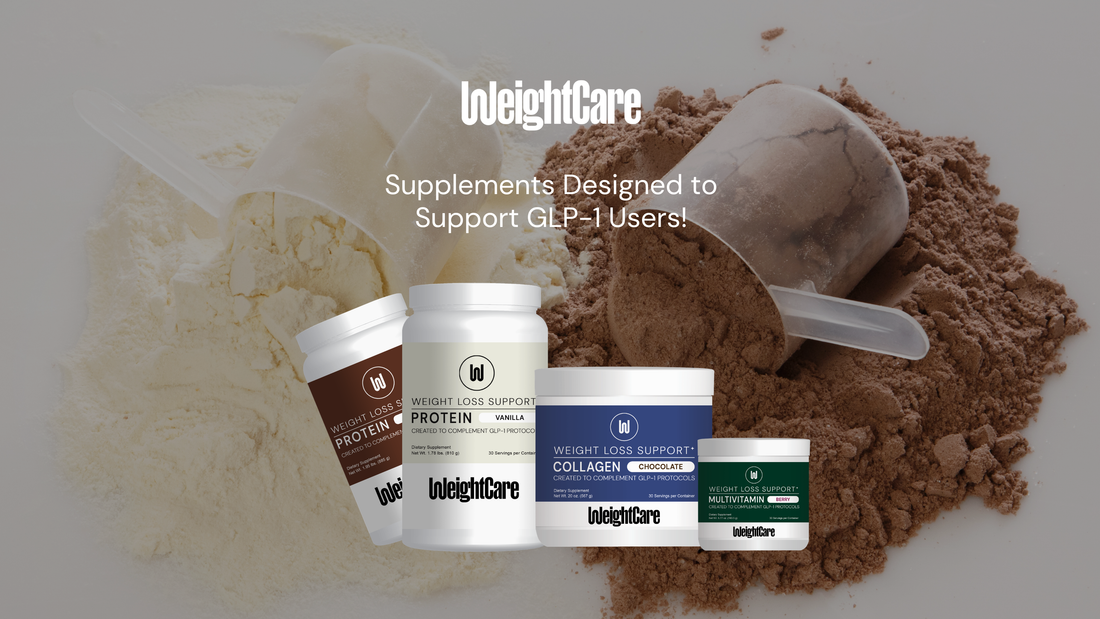
WeightCare's approach: Our protein supplement is specifically formulated to be non-dairy, easy to digest, and designed for reduced-appetite days when getting enough protein from food alone is a challenge.
2. Multivitamin — Filling the Nutrient Gaps
Why it matters: Eating less means consuming fewer vitamins and minerals across the board. Common deficiencies among GLP-1 users include Vitamin B12, Vitamin D, iron, calcium, and fat-soluble vitamins A and E, all nutrients that become harder to consume in adequate amounts when food intake is significantly reduced.
Vitamin B12 deserves special attention. GLP-1 medications slow digestion, which may impair B12 absorption. B12 deficiency can cause fatigue, brain fog, and nerve issues, symptoms that are easy to mistake for medication side effects.
What to look for: A comprehensive daily multivitamin that includes B12 (ideally in methylcobalamin form for better absorption), Vitamin D, iron, and fat-soluble vitamins A and E. Avoid single-nutrient megadoses unless directed by a clinician.
WeightCare's approach: Our multivitamin supplement is designed specifically to address the nutritional gaps most common in GLP-1 users, without the excessive dosing that can cause GI discomfort.
3. Collagen — Protecting Your Skin During Rapid Weight Loss
Why it matters: Significant or rapid weight loss, a hallmark of GLP-1 success, can outpace the skin's ability to retract, leading to loose or sagging skin. Collagen is the structural protein responsible for skin elasticity, firmness, and hydration. Supplementing with collagen provides your body the building blocks it needs to support skin integrity as weight comes off.
Beyond skin health, collagen also supports joint health, which becomes increasingly relevant as physical activity increases throughout a weight loss program.
What to look for: Hydrolyzed collagen peptides are the most bioavailable form. Look for a product that includes Vitamin C, which is essential for collagen synthesis.
WeightCare's approach: Our collagen supplement includes hydrolyzed peptides in a form designed for easy daily use, supporting skin health throughout your weight loss journey, not just at the end.
4. Fiber — Managing the Most Common GLP-1 Side Effect
Why it matters: Constipation is the most persistent long-term GI side effect of GLP-1 medications. These medications slow gastric emptying, which is how they promote fullness, but this also slows the entire digestive system. Reduced food intake means less dietary fiber as well, compounding the problem.
Adequate fiber intake supports regular bowel movements, feeds beneficial gut bacteria, and contributes to the feeling of fullness that complements GLP-1 therapy.
How much you need: The general recommendation is 25 to 30g of fiber per day. Most GLP-1 users fall well short of this. A fiber supplement such as psyllium husk can help bridge the gap.
Tip: Increase fiber gradually and pair with adequate water intake. Too much too fast can worsen bloating and discomfort.
5. Probiotics — Supporting Gut Health and Digestive Comfort
Why it matters: GLP-1 medications alter gut motility, which can disrupt the microbiome and trigger symptoms like bloating, diarrhea, and digestive discomfort, particularly in the early weeks of treatment. A quality probiotic helps maintain a healthy balance of gut bacteria, reducing these symptoms and supporting overall digestive health.
Research also points to a strong gut-brain connection. A healthier gut microbiome may support mood stability and better adherence to treatment over time.
What to look for: A multi-strain probiotic including Lactobacillus and Bifidobacterium varieties. Take on an empty stomach for best absorption.
The WeightCare Supplement Bundle: Built for GLP-1 Users
Rather than piecing together individual supplements and guessing at dosing, WeightCare's supplement bundle was developed specifically for people on GLP-1 weight loss programs. It combines protein, collagen, and a comprehensive multivitamin in a single, convenient package designed to:
- Prevent muscle loss during active weight loss
- Support skin elasticity as the body reshapes
- Fill micronutrient gaps caused by reduced food intake
- Be gentle enough on the stomach for GLP-1-sensitive digestion
It's the nutritional foundation that works with your medication, not alongside it as an afterthought.
Shop the WeightCare Supplement Bundle
When to Start Taking Supplements on GLP-1
The best time to start supplementing is when you start your medication, not after problems develop. Nutrient deficiencies and muscle loss are much easier to prevent than to reverse.
If you're already several weeks or months into GLP-1 therapy, it's not too late. Ask your provider to run a basic metabolic panel and check B12, Vitamin D, and iron levels so you can address any existing deficiencies with targeted supplementation.
Supplements to Avoid (or Use With Caution) on GLP-1
Not all supplements are safe or beneficial alongside GLP-1 medications. A few to approach carefully:
Calcium: High-dose calcium supplements taken without medical guidance can interfere with iron absorption and cause GI discomfort. Get calcium from food when possible and supplement only if deficiency is confirmed.
Fat-soluble vitamins in high doses: Vitamins A, D, E, and K are stored in body fat and can accumulate to toxic levels if oversupplemented. Include them in a balanced multivitamin rather than standalone high-dose products.
Weight loss supplements: Thermogenics, appetite suppressants, and other over-the-counter weight loss products are unnecessary and potentially dangerous when combined with GLP-1 medications. Avoid these entirely.
Herbal supplements: Some herbs interact with GLP-1 medications or affect blood sugar. Always disclose all supplements to your prescribing provider.
Frequently Asked Questions
Do I need supplements while on GLP-1 medications? Most people benefit from supplementation while on GLP-1 medications because reduced food intake makes it harder to meet daily protein and micronutrient needs through diet alone. A protein supplement and comprehensive multivitamin are the most universally recommended starting points.
What supplements help with GLP-1 side effects like nausea and constipation? For nausea, a gentle non-dairy protein powder and small, frequent meals are helpful. For constipation, the most common long-term GI side effect, a fiber supplement combined with increased water intake is the most effective approach. Probiotics can also support overall digestive comfort.
Can I take collagen on GLP-1 medications? Yes. Collagen is safe to take alongside GLP-1 medications and is particularly beneficial during significant weight loss to support skin elasticity and joint health.
What vitamins are depleted by GLP-1 medications? GLP-1 medications don't directly deplete vitamins, but reduced food intake combined with slower digestion can lower levels of Vitamin B12, Vitamin D, iron, calcium, and fat-soluble vitamins. A comprehensive multivitamin addresses most of these gaps.
How much protein do I need on semaglutide or tirzepatide? Most GLP-1 protocols recommend 1.2 to 2.0 grams of protein per kilogram of body weight per day to protect lean muscle mass during active weight loss. This is significantly higher than standard recommendations and often requires protein supplementation to achieve.
Are WeightCare supplements safe to take with my GLP-1 medication? WeightCare supplements are designed specifically for GLP-1 users and are safe for most people. As with any supplement, discuss with your WeightCare provider if you have specific health conditions or take additional medications.
The Bottom Line
GLP-1 medications like semaglutide and tirzepatide are highly effective for weight loss, but they work best when your body is fully nourished. Protein prevents muscle loss. A multivitamin closes the nutrient gaps. Collagen protects your skin. Fiber and probiotics keep your gut healthy.
The right supplements don't replace your medication. They protect everything else so the weight you lose is fat, not muscle, vitality, or long-term health.
Explore WeightCare's Supplement Bundle for GLP-1 Users
The information in this article is provided for educational purposes and does not constitute medical advice. Decisions about GLP-1 therapy should be made in partnership with a licensed healthcare provider who can evaluate your individual health history and goals.